In the fast-paced world of digital business, every company is on the hunt to optimize their operations. As a leading provider of web design and software services, we’re privy to the fact that one of the secret sauces to success is the implementation of Enterprise Resource Planning (ERP). But what is ERP, really? And why has it become so crucial for modern businesses? Let’s delve deeper!
What’s ERP and Its History
So, ERP stands for Enterprise Resource Planning. In simple words, it’s a software system that brings together all the different parts of a business into one place. Think of it as a central hub for everything a company does. Back in the 1960s, it started mainly for factories to help them keep track of their stock and production. As technology got better over the years, ERP started covering other stuff like hiring people, managing money, and customer relations. Nowadays, in our fast-paced digital world, a lot of companies rely on ERP to stay ahead in the game and adjust to the ever-changing market.
How to Use ERP
Implementing ERP isn’t an overnight task. It involves several critical steps:
- Needs Analysis: Pinpoint your business’s specific needs and areas requiring enhancements.
- Vendor Selection: Choose the right ERP provider aligned with your requirements and budget. In this context, WinBiz is your go-to company. You can discuss pricing details with us right here.
- Implementation: Install and configure the system as per your requirements.
- Training: Ensure all users are adequately trained.
- Maintenance: Monitor, update, and refine the system regularly.
Features
Modern ERP comes packed with an array of advanced features, such as:
- Data Analysis: To assist in business decision-making.
- Process Automation: Minimize routine tasks and enhance efficiency.
- Real-time Reports: Generate reports with real-time data to back decision-making.
- Resource Management: Optimize the utilization of business resources.
- Integration with Other Systems: Ensure smooth collaboration between various systems and apps.
- High-level Data Security: Protect business data from potential threats.
Key Components
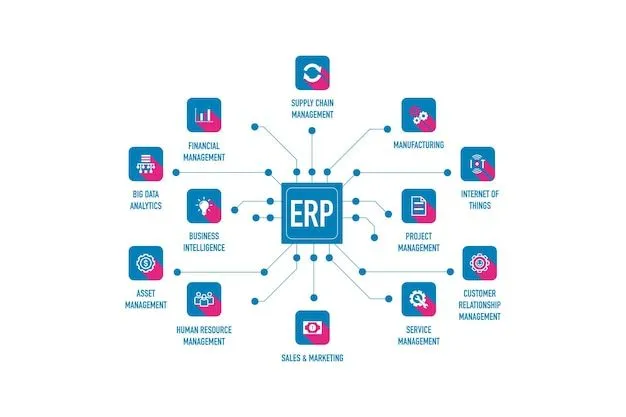
Some primary components of ERP include:
- Financial Module: Manage and track financial transactions, expenses, and revenue.
- Human Resource Management (HRM): Oversee HR, recruitment, and training.
- Supply Chain Management (SCM): Handle procurement, inventory, and logistics.
- Customer Relationship Management (CRM): Administer customer relations and sales.
- Production Management: Regulate the production process from start to finish, ensuring efficiency and success.
In the competitive digital era, choosing to invest in ERP is a savvy move to ensure sustained business growth. ERP isn’t just about tech—it’s about envisioning the future. Don’t let your business fall behind. We offer services to streamline your business endeavors. Contact us ASAP for more details via https://wa.me/6285921230541 or email at marketing@winbiz.id.
See our blogs here.